Tree Roots in Drains: How to Identify Them and the Correct Remedial Steps
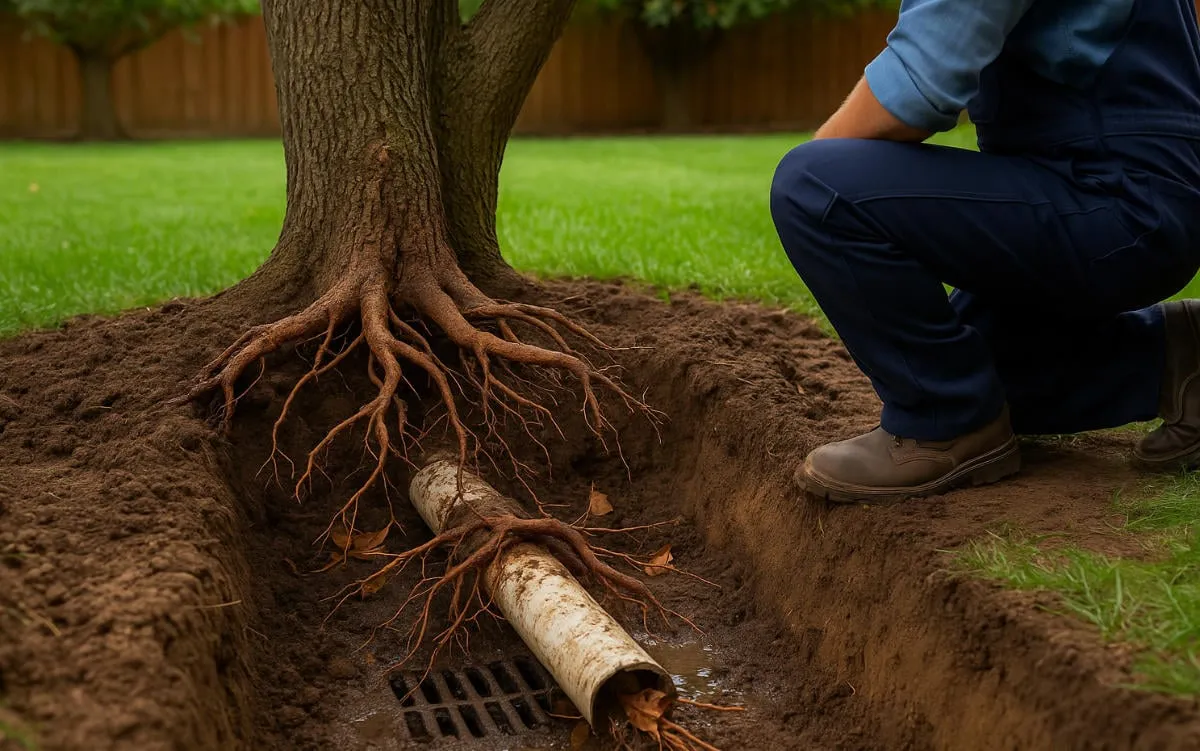
Tree root intrusion is a common, progressive drain defect. This guide explains how we definitively diagnose it via CCTV survey, document the evidence, and outline the precise remedial options.
The Diagnostic Process: Confirming Root Intrusion with CCTV
Suspected root ingress requires definitive confirmation. Our diagnostic approach is procedural and evidence-led. We deploy a high-resolution, pan-and-tilt CCTV camera into the drain. This allows us to visually inspect the pipe's internal condition, tracking its entire length to locate breaches.
The primary evidence is visual. We look for thin, hair-like root filaments initially entering at pipe joints or cracks. In advanced cases, these coalesce into thick, matted root masses that obstruct flow. The camera records all findings in real-time, with the footage annotated to pinpoint the exact location, depth, and severity of the intrusion relative to drainage manholes.
This documented evidence is critical. It moves the issue from a suspicion to a verified defect with a known location and extent. The survey report, complete with time-stamped video and photographic stills, forms the basis for any remedial quotation and work, ensuring the solution is precisely targeted.
Understanding the Problem: Why Roots Target Drains
Roots seek moisture and nutrients. Older clay or concrete pipes, with their porous joints, are particularly vulnerable. Even small cracks in modern PVC pipes can provide an entry point. The root tip penetrates the gap, and once inside the nutrient-rich environment, it thickens and branches, exacerbating the initial damage.
This process is mechanical and progressive. As roots expand, they can displace pipe joints, crack pipe walls, and ultimately create a complete blockage that causes backups. It is not a superficial blockage; it is a structural defect of the pipeline itself that requires a structural repair.
Evidence-Based Remedial Options
Once diagnosed, the solution depends on the damage level documented in the survey. For early-stage intrusion where the pipe structure is largely intact, high-pressure water jetting can clear the root mass. However, this is a temporary measure; the roots will regrow unless the entry point is sealed.
The definitive, long-term repair is a structural one. For localised damage, we often recommend patch lining or a point repair. This involves inserting a resin-saturated felt liner that is inflated against the damaged section and cured in place, creating a new, seamless pipe-within-a-pipe that roots cannot penetrate.
For extensive damage along a pipe run, full pipe relining (Cured-in-Place Pipe) is the standard solution. A new liner is installed throughout the existing pipe and cured, effectively replacing the pipeline without excavation. Only in cases of complete collapse is traditional excavation and pipe replacement necessary. The chosen method is always justified by the visual evidence from the initial survey.
Post-Repair Management and Prevention
Following a structural relining repair, the root entry path is sealed. We advise a post-repair CCTV survey to document the new pipe's integrity. For ongoing management, consider the location of trees relative to your drains. While removal is seldom necessary, strategic root barriers or regular CCTV monitoring surveys can provide early warning of new issues elsewhere in the system, allowing for proactive maintenance.
Frequently asked questions
Can you just jet the roots out, or is a permanent repair always needed?
Jetting clears the immediate blockage but is a temporary measure. It removes the root mass inside the pipe but does not seal the crack or joint where roots entered. Without a structural repair like relining, regrowth is highly likely, typically within 12-24 months. The CCTV survey informs whether the pipe is fit for relining or if jetting is merely a short-term relief.
How does a CCTV survey definitively prove roots are the problem?
The high-resolution camera provides direct visual evidence. We record live footage showing root filaments or masses within the pipe, their exact location via distance metering, and the associated structural damage (cracked joints, displaced sections). This objective documentation differentiates root intrusion from other blockages like fatbergs or collapsed pipes, ensuring the correct remedy is specified.
What is pipe relining and how does it stop roots for good?
Pipe relining (CIPP) is a trenchless repair method. A resin-saturated liner is inserted into the damaged pipe and inflated. Once cured, it forms a hard, jointless 'new pipe' within the old one. This seamless barrier eliminates all cracks and joints—the root entry points—effectively making that section of drain impervious to future root intrusion, as documented in post-installation CCTV surveys.