Commercial Grease Management
Grease Trap Installation & Servicing London
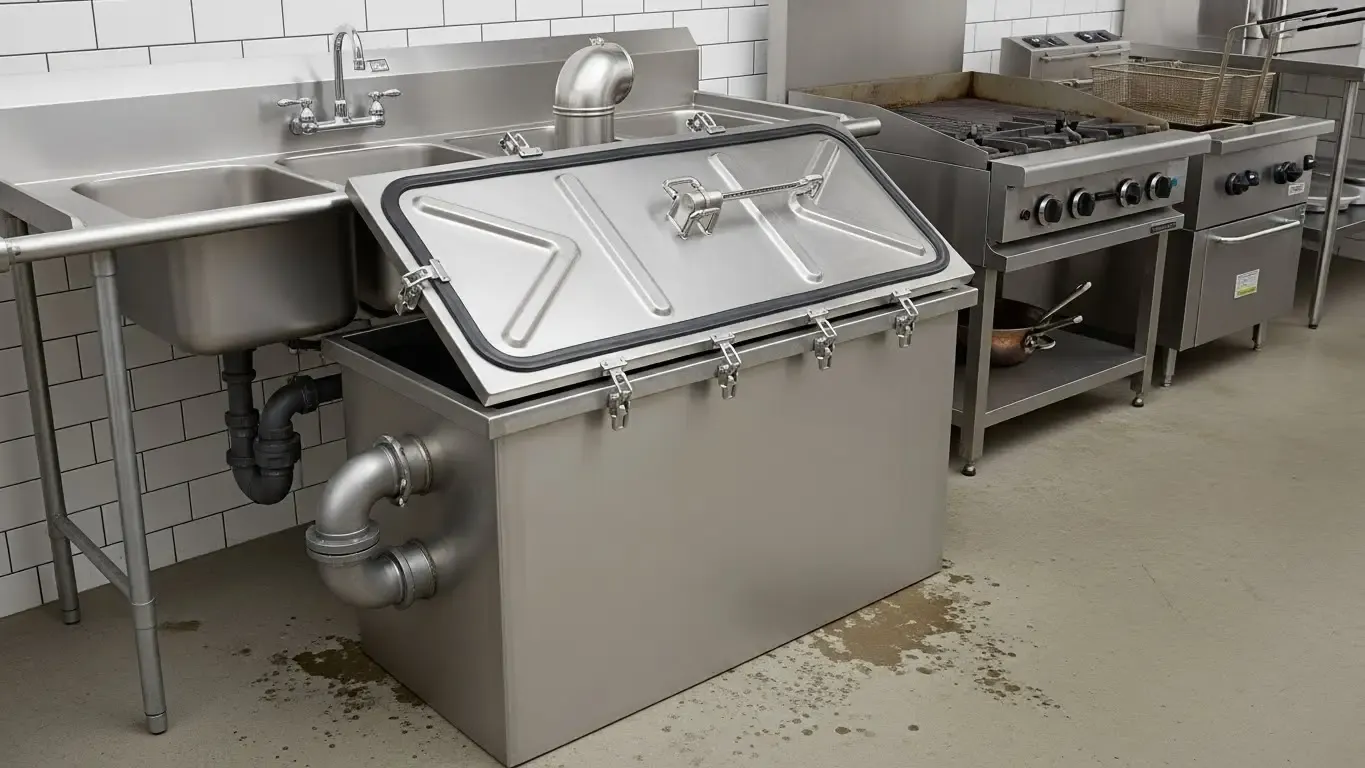
Our grease trap installation and servicing for London is defined by a diagnostic-led methodology, essential for commercial kitchens, multi-occupancy residential blocks, and food service establishments. We approach every project with the precision required for compliance, asset management, and insurance validation, not merely routine maintenance.
Every service begins with a comprehensive CCTV survey of the connected drainage lines and the interceptor itself. This establishes a baseline condition, identifies any pre-existing defects such as fatberg ingress or structural compromise, and informs the precise scope of required works, whether for new installation, remedial repair, or scheduled servicing.
Our reporting framework utilises WRc-style defect classification, providing landlords, commercial property managers, and conveyancers with unambiguous, technical documentation. This evidentiary standard is critical for regulatory audits, leaseholder disputes, and property transaction due diligence, transforming a maintenance activity into a managed asset record.
Pricing is scope-based, derived from the diagnostic survey and specification report. We provide fixed-quote proposals, ensuring no deviation from the evidenced and agreed work schedule.
What you get
- Initial & post-service CCTV survey documentation provided for all works.
- WRc-style defect classification in all written survey and service reports.
- Precise capacity specification based on kitchen effluent volume and type.
- Full compliance with Building Regulations and local authority FOG (Fats, Oils, Grease) policies.
- Installation of both passive grease interceptors and automatic grease recovery units (AGUs).
- Scheduled servicing regimes documented with before/after evidence for audit trails.
How it works
A method, not a guess
01
Diagnostic CCTV Survey
We conduct a full drainage CCTV survey from kitchen outlets to the proposed or existing interceptor location, mapping the system and classifying any defects to WRc standards.
02
Specification & Report
A detailed report outlines the required grease trap capacity, type, and location, supported by survey evidence. This forms the basis for a fixed-scope works specification.
03
Precision Installation or Service
Our engineers execute the installation or servicing to manufacturer and regulatory standards, with all work stages documented. Post-installation CCTV verification is standard.
04
Evidentiary Handover
You receive a comprehensive dossier including the initial survey report, installation/service certificate, and post-works CCTV survey with defect closure notes.
Questions
Grease Traps FAQs for London homeowners
Why is a CCTV survey necessary for grease trap installation?
A pre-installation CCTV survey diagnoses the condition of the connecting drains, ensuring correct siting and identifying any pre-existing defects that could affect performance or liability. It provides the documentary baseline essential for future comparison and dispute resolution.
What does WRc-style reporting provide for a commercial landlord?
It delivers a standardised, technical assessment of the drainage asset. This unambiguous classification of defects (e.g., 'AGN' for grease deposits, 'FIS' for structural issues) is invaluable for maintenance planning, serving Section 106 notices, and during property transactions.
How do you determine the correct grease trap capacity?
We calculate capacity based on kitchen fixture ratings, peak flow rates, and waste characteristics, adhering to BS EN 1825 and local guidance. This engineering calculation, documented in our report, ensures compliance and prevents over- or under-specification.
What documentation is provided for insurance or conveyancing?
We provide a full evidence pack: the initial diagnostic report with defect codes, a specification document, a compliance certificate for the installed/serviced unit, and a post-works verification survey. This creates a complete audit trail.
Do you service automatic grease recovery units (AGUs)?
Yes. Our servicing includes mechanical function testing, sensor calibration, and waste extraction, all documented with performance data. We similarly apply a diagnostic CCTV survey to the inlet and outlet lines to assess the unit's efficacy.
Explore the cluster
Related drainage services & guides
Drain clearance
Fast, fixed-price blockage clearance
High-pressure jetting
Grease, silt and debris cleared
CCTV drain survey
Camera diagnosis, written report
No-dig relining
Repairs a pipe without excavation
Root cutting
Root ingress cleared same visit
Emergency drainage
Urgent response, clear pricing
Pricing
Published rates by job type and time band
Areas we cover
All 33 London boroughs
Drainage guide
The complete guide to London drainage
Insurance claims
CCTV documentation for claims
London-wide
Grease Traps across all 33 boroughs
Same multi-method kit and fixed-fee approach from Barking to Richmond. Pick your borough for local housing detail.
People also book
Commercial Contracts
Commercial drainage contracts for London built on scheduled CCTV surveys and defect reporting, so asset condition and insurance standing stay documented.
Learn moreJetting
High-pressure water jetting in London run as a diagnostic exercise: camera before and after, with documented evidence for insurers or a property transaction.
Learn moreDrain Clearance
Blocked drain clearance in London led by CCTV survey and defect classification, with a documented report for insurers, landlords and property transactions.
Learn moreNeed to know what the drain is actually doing?
Tell us the symptoms and your postcode. We confirm what the survey covers and what the written report will contain before you commit to anything.
Book a drain survey